
Home / photo booth / Power Station
Power Station in Atlanta
Power Station
Power & Space Planning for Your Atlanta Photo Booth Setup
Keep your photo activation running smoothly anywhere in your venue with our Portable Event Power Station. Designed to deliver clean, silent, and reliable battery power without messy extension cords or outlet hunting, our compact power pack keeps your printers and lighting running at full speed—giving you total setup flexibility and uninterrupted guest experiences on the spot.
Power Access Is the First Setup Decision for Any Booth
Before you pick a booth or a spot in the room, find the outlet. Every booth needs a dedicated 3-prong, 110V outlet within 20 to 30 feet of where it'll stand. High-power add-ons like printers or studio lighting shouldn't share a circuit that's already loaded with DJ speakers or catering warmers.
When you plan the Power Station for your Atlanta event, start with the plug, not the backdrop. It's easy to fall for a booth style first and then look for a corner to put it in. The better order is to find where clean, steady power is, and then build the booth spot around it. A great booth that loses power halfway through the reception isn't a great booth.
Here's what our team needs at every setup, whether it's a 360 video booth, a luxury mirror booth, or a digital social booth:
• A dedicated 3-prong, 110V outlet. A standard grounded wall outlet works, as long as the booth has it to itself.
• An outlet within 20 to 30 feet of the setup area. That keeps the cord run short and keeps it out of guest walkways.
• A separate circuit from the heavy hitters. Printers and studio lighting shouldn't share an overloaded circuit with DJ speakers or catering warmers.
Why does "dedicated" matter so much? A single circuit can only carry so much load. Stack a sound system, a row of food warmers, and a photo printer on the same one, and the breaker can trip right when the dance floor fills up. The music cuts out, the booth screen goes dark, and the line of guests waiting for their shot just stands there. Keeping the booth on its own circuit takes that risk off the table.
Distance matters too. A lot of rooms have outlets only along the walls, while the spot you picture for the booth sits in the middle of the floor or near the entrance. If the closest outlet is too far away, it's better to move the booth than to run a long cord across a busy walkway. Power and space go together here. Your spot also has to meet the booth's footprint and ceiling needs, so pick a place that checks both boxes at once.You don't need to be an electrician to sort this out.
Ask your venue coordinator a few simple questions before booking day:
• Where are the outlets closest to where we'd like the booth?
• Are those outlets on their own circuit, or do they share one with other parts of the room?
• Where will the DJ and caterer plug in?
• For outdoor or tented events, is there a power source near the setup area at all?
Bring those answers to us when you book. If the outlets don't line up with the spot you want, it's an easy fix on paper weeks out, and a stressful one on event night. Get the power sorted first, and everything else, from your custom overlays to instant sharing, can run all night without a hitch.
Footprint and Outlet Placement Vary by Booth Type
Once you know where the power is, the next question is simple. Will the booth you want fit there? Each booth takes up a different amount of room, and some need more headroom than others. The right spot is one that fits the booth's footprint and still sits within reach of that dedicated outlet.
Here's what each booth needs:
• 360 video booth: a level, open space of at least 10 by 10 feet. Ideally, give it 12 by 12 feet. The rotating arm needs room to swing safely, plus a clear zone for guests waiting their turn.
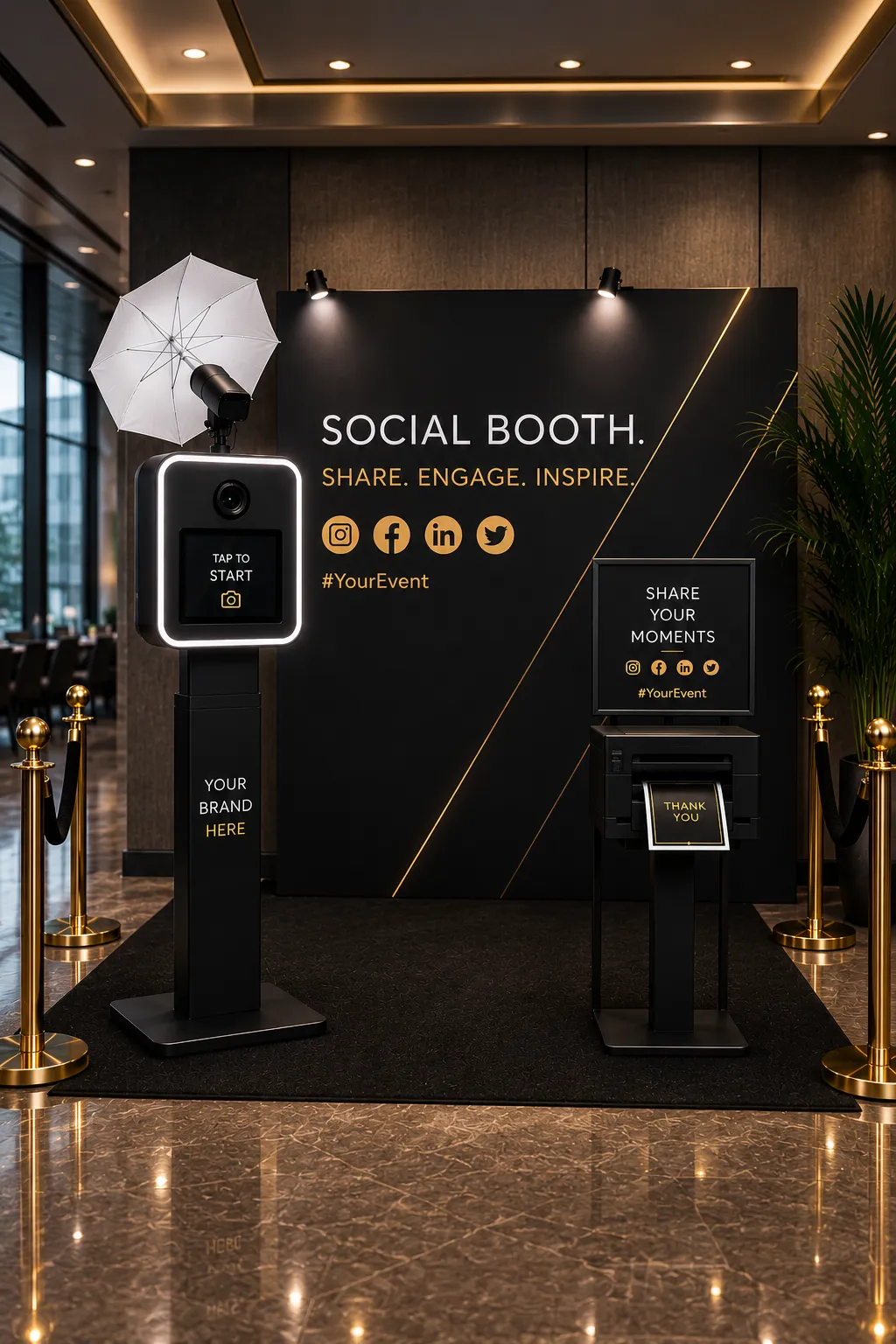
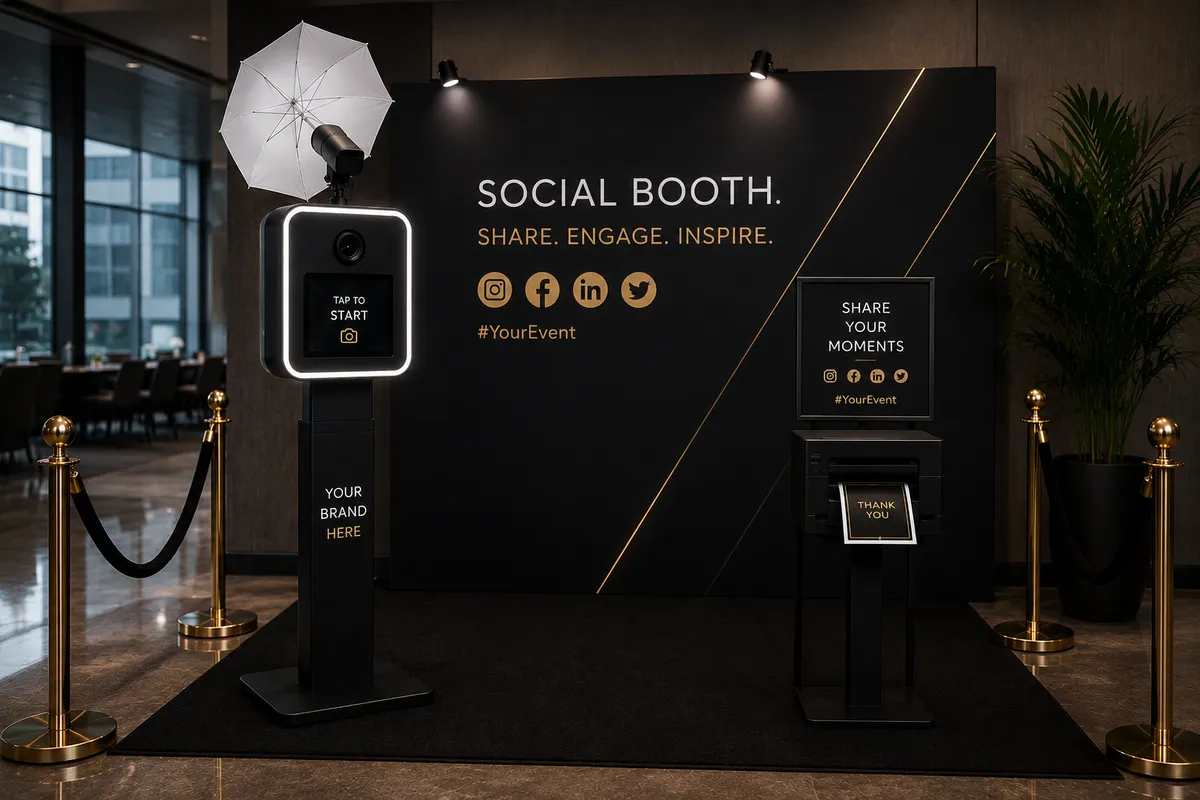
• Luxury mirror and backdrop booths: an 8 by 8 foot footprint and at least 8 feet of ceiling clearance for the standard backdrop frames and lighting.
The 360 video booth asks the most of your floor plan. "Level" really matters here. A platform with a spinning arm needs a flat, even surface. A sloped lawn, a patchy patio, or a spot where two floor types meet isn't a good fit. "Open" matters just as much. That 10 by 10 foot space can't have tables, chairs, or decor tucked inside it. When you sketch the 360 spot, draw a square, then add a little room around it for the line. Guests love to crowd in and watch the slow-motion clips play back, so that waiting area fills up fast.
Outlet placement matters more with a 360 than with a standing booth. The power cord has to reach the setup without crossing the arm's path or the spot where guests stand and wait. If the only outlet sits on the far side of the dance floor, that spot probably won't work, even if the square fits.
Mirror and backdrop booths are more compact, but they bring a height check that's easy to miss. Most ballrooms clear 8 feet with room to spare. Some spaces don't, though. Think about a lower ceiling in a basement-level room, a loft under a mezzanine, or a corner under ductwork or hanging lights in an industrial venue. Measure the real ceiling height at the exact spot, not just the main room. A backdrop that fits in the center of the floor may not fit in the corner you picked.
Quick fit check: measure the floor space, measure the ceiling at that spot, and note the distance to the nearest dedicated outlet. If all three numbers work, you've found your booth spot.
If you're booking a digital social booth or one of our other setups, ask us for its space needs when you reach out. We'll match the booth to the room you have.
Picture this. You picked a cozy nook by the entrance for a 360 booth because every guest walks past it. On paper it looks perfect. Then you measure, and it's only 8 feet wide, with the nearest outlet across the hallway. A mirror booth would fit that nook with ease. The 360 might belong at the edge of the dance floor, near the outlet you already found. Make that call early and both setups shine on the big night.
Shared Circuits Cause the Most Setup Problems
Finding an outlet is the easy part. Making sure nothing else is pulling from that same circuit is where most power plans fall apart. An outlet can look free on the wall, yet it may share a line with three other plugs you can't see from where you're standing.
Start by knowing who else in the room needs serious power.
These are the usual heavy hitters at a wedding, gala, or company party:
• DJ or band gear: amps, speakers, and mixing boards
• Catering equipment: food warmers, chafing setups, and coffee urns
• Lighting: uplights, dance floor lights, and any studio lighting
• Booth add-ons like photo printers
• Cooling for tents and patios, like big fans or portable AC units during a hot Atlanta summer
Any two of those on one circuit can be too much. All of them together almost always is.
So how do you tell whether outlets share a circuit? You can't always see it, but a few clues help:
• Outlets that sit close together on the same wall are often wired to the same line.
• A venue with a labeled breaker panel can show you which outlets connect to which breaker.
• Rooms split by an air wall, like many hotel ballrooms, may run power differently on each side.
• Outdoor events on a generator mean every vendor shares that one power source, so the total load matters.
The simplest move is to ask your venue coordinator for a power map, or at least to have them name which outlets are on separate circuits. Most venues that host events often have this information ready.
Timing matters too. Power use isn't flat all night. It spikes when dinner service starts and the warmers are full, then again when the lights drop and the DJ turns it up. Those are also the moments when your guests head to the booth. A circuit that held steady during cocktail hour can hit its limit right when the party peaks.
Here's how that can play out. Say you're hosting a company party in a meeting room with outlets along one wall. The coffee station plugs in at one end, the DJ takes the middle, and the booth gets the outlet at the far end. Each vendor sees their own free plug and assumes they're fine. Nobody knows all three outlets run on one breaker until the dessert coffee brews and the bass drops at the same time.
The fix is coordination, not guesswork. Share your vendor list with the venue, ask where each vendor will plug in, and make sure the booth's outlet isn't on the same line as the caterer or DJ. A five-minute email with your coordinator weeks out keeps every vendor powered and every guest moving through the booth until the last song.
Venue Walkthrough Checklist Before Booking
The venue walkthrough is your best chance to lock in your booth's power and space before you book. You're already there with a coordinator who knows the building, so bring a tape measure and this list. Ten minutes of checking now saves a scramble on event night.
Stand in the exact spot where you want the booth, and check these things:
• Floor space: measure the open area at that spot. Remember the 10 by 10 foot minimum for a 360 video booth and 8 by 8 feet for a mirror or backdrop booth.
• Ceiling height: measure right above the spot, not in the middle of the room. Look for beams, ductwork, chandeliers, or a low mezzanine.
• Level ground: look for slopes, steps, rugs, or seams where two floor types meet.
• Nearest outlet: pace off the distance and confirm it's close enough to reach without crossing guest paths.
• Circuit check: ask whether that outlet is on its own circuit or shares one with the DJ, caterer, or lighting.
• Guest flow: make sure the line won't block a doorway, the bar, or the path to the restrooms.
Then step back and look at how the booth gets into the room. Our team handles delivery and setup, so the path from the parking area to your spot matters. Ask your coordinator these questions:
• Where do vendors load in, and is there a loading dock, elevator, or ramp?
• Are there stairs or narrow halls between the entrance and the booth spot?
• What time can vendors start setting up, and when does the room need to be cleared?
• Does the venue require a certificate of insurance (COI) from vendors? If it does, who should receive it, and by what date?
Outdoor and tented events need two extra answers. First, where does power come from, and is it a generator shared by every vendor? Second, what's the backup plan if the weather turns? A hot, humid Atlanta summer afternoon can bring a storm with little warning. You want a covered, level spot picked ahead of time, with power that still reaches it, not a last-minute shuffle into a corner that doesn't fit.
Here's how a good walkthrough plays out. You tour a converted warehouse venue and love the brick wall by the bar. You measure and find plenty of floor space. The ceiling is high in the center but drops under a row of pipes near the wall. The closest outlet is nearby, and the coordinator says it's on its own breaker. You snap a photo, jot the numbers down, and you're done. One trip gives you everything you need to pick the right booth.
Before you leave, take a few wide photos of the spot and one close-up of the outlet. Write down your floor size, ceiling height, outlet distance, and setup window. Send those to us with your date, and we can confirm the right booth for the space so your custom overlays and instant sharing run all night.
When Outdoor or Non-Standard Venues Need Extra Power Planning
Hotel ballrooms and event halls are built for vendors. Backyards, parks, rooftops, barns, and raw warehouse spaces aren't. In these spaces, power isn't a given. You have to plan it on purpose, and you need to do that before you fall in love with a booth spot.
Home events surprise people the most. A house may have only one or two outdoor outlets. The outlet in the garage or on the patio might share a line with a freezer, a fridge, or a pool pump. String lights can run on it just fine, but a booth on top of everything else is a different story. Ask which breaker inside the house controls that outlet and what else runs on it. If the only free outlet is indoors, running a cord through a doorway leaves the door propped open and puts a cord where guests walk. Moving the booth closer to good power is usually the better choice.
Other non-standard venues each come with their own question to ask.
• Parks and open fields: There may be no power at all. Ask the park or the permit office if outlets exist and if generators are allowed.
• Rooftops and terraces: Outlets can be few and far apart. Ask if the building lets vendors bring power out from inside.
• Warehouses and industrial lofts: Outlets often sit on columns or along the back wall, far from the spot that looks best in photos. Older buildings may also have fewer circuits than the room size suggests.
• Barns and farm venues: Power may come from a single outbuilding, so every vendor could be pulling from the same few outlets.
• Historic homes: Rooms often have fewer outlets, and older wiring can trip under loads a newer building handles easily.
If your event runs on a shared generator, talk with whoever supplies it early. Give them your full vendor list and the booth's needs: a dedicated 3-prong, 110V outlet placed close enough to reach the setup spot without crossing guest paths. That distance counts from the place the booth plugs in, not from the generator. Ask where the generator will sit, and keep it away from the booth line and the dance floor so guests aren't standing in noise. Also confirm it has enough fuel for the whole event, including setup time before guests arrive. On a hot Atlanta afternoon, the fans and cooling units on that same generator make this step even more important.
Here's how it can play out. You're hosting a backyard birthday party, and you want the booth by the pool because the lighting looks great at sunset. The nearest outlet is on the garage wall. It looks free, but the pool pump and an extra freezer full of drinks run on the same breaker. Checking that one breaker a week out tells you to shift the booth toward the patio outlet. That way, nothing trips once the music starts.
For any unusual space, send us a photo of where the power comes from, the distance to your spot, and a list of what else will plug in nearby. We'll help you pick the booth that fits.
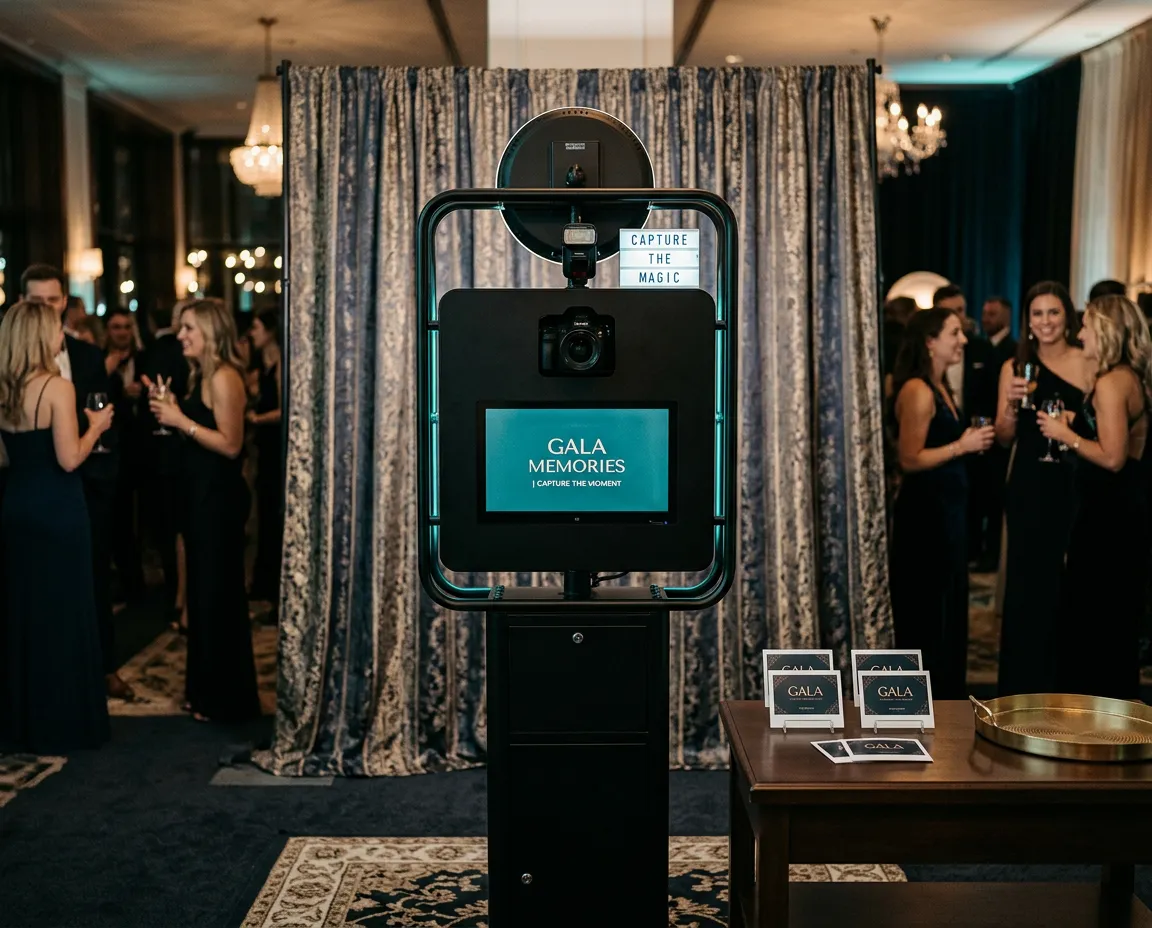
Power Station
Keep your photo activation running smoothly anywhere in your venue with our Portable Event Power Station, featuring a high-capacity, whisper-quiet battery unit that powers printers, lighting, and booths without relying on wall outlets or long extension cords. Delivering clean, uninterrupted energy tailored to off-grid or hard-to-reach event spaces, this compact setup gives you total placement flexibility so your guests never miss a moment on the spot.
Best For: Outdoor weddings, tented receptions, rooftop parties, park celebrations, historic venues with limited outlets, and convention booths without floor power drops.
Features: High-capacity silent lithium battery, pure sine wave power (safe for high-speed photo printers and studio lighting), zero tripping hazards or taped-down cables, compact footprint that hides easily behind backdrops, and multi-hour runtime.
Contact us with your date and venue layout to lock in your booking!

Power Station
Frequently Asked Questions
What happens if the venue only has one outdoor outlet and it's far from the booth spot?
We'll ask you to move the booth closer to good power instead of running a long cord. A cord stretched across a yard or patio can cross guest walkways and create a trip hazard. It's safer and easier to shift the booth location than to fight a weak or distant outlet. Send us a photo of the outlet and the distance to your preferred spot, and we'll help you find the best placement.

Can the photo booth run on a generator if my event has no building power nearby?
Yes, as long as the generator can supply a dedicated 3-prong, 110V outlet near the booth setup. Talk to your generator supplier early and give them the booth's power needs along with your full vendor list. Make sure the generator has enough fuel for setup time plus the whole event. Keep it positioned away from the booth line and dance floor so the noise doesn't bother guests.

What if I don't know whether an outlet at my venue is on its own circuit?
Ask your venue coordinator for a power map or to point out which outlets connect to which breaker. Most venues that regularly host events keep this information on hand. If no map exists, look for clues like outlets grouped together on one wall, which often share a line. Getting this confirmed before booking day prevents a tripped breaker when the dance floor fills up.

Rent Atlanta Photo Booths
Atlanta's premium photo booth rental experience for weddings, corporate events, and private parties.


Contact
Phone: (404) 998-5117
Email: [email protected]
Address: 16 W Peachtree Pl NW, Suite B, Atlanta, GA 30308
© 2026 Rent Atlanta Photo Booths. All rights reserved. · Veteran owned · Serving Atlanta and the greater metro area